In a fashion world increasingly shaped by digital creators, few stories feel as unusual—and as fitting for the moment—as that of a Margiela superfan who has transformed her obsession with the house into sculptural furniture.
What began as an intense admiration for avant-garde designers like Maison Margiela, Rei Kawakubo, and Yohji Yamamoto has evolved into something far more physical: chairs made of wigs, benches constructed from industrial materials, and objects that blur the line between fashion reference and contemporary art.
Now, her work has caught the attention of Maison Margiela itself, leading to a creative collaboration tied to the brand’s Fall 2026 Artisanal universe. It is a rare feedback loop where fan culture becomes part of the fashion system it once simply observed.
From Digital Obsession to Physical Creation
The creator behind this world is Angelina Nagornova, a former corporate employee who rebuilt her life around fashion content creation and experimental object-making.
Her entry point into fashion was not traditional. Coming from a working-class background in Eastern Europe, she did not grow up surrounded by luxury or design institutions. Instead, her understanding of fashion developed through online exploration, photography, and subcultural aesthetics.
What drew her in most was not mainstream fashion, but its most radical edges—designers who dismantled expectations of beauty and structure. Margiela, in particular, became a central influence, alongside Rei Kawakubo and Yohji Yamamoto.
Rather than treating fashion as consumption, she began to treat it as language.
Fashion as Object, Object as Fashion
What makes her work stand out is the way it extends fashion into physical space.
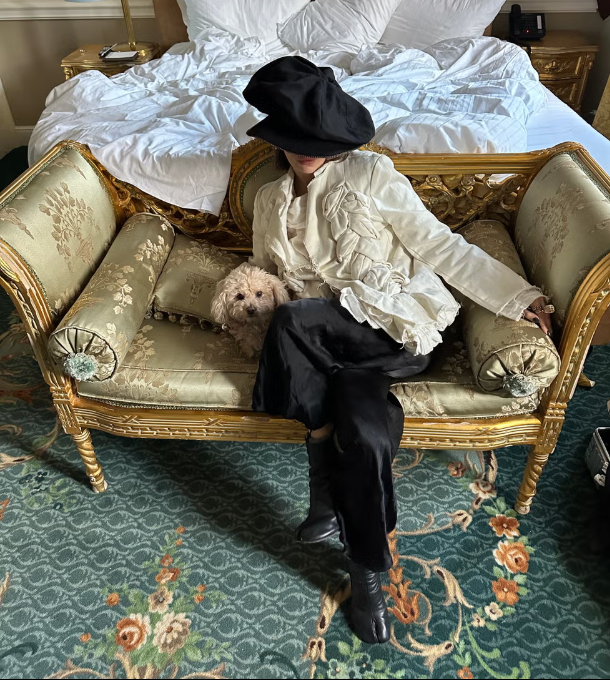
Instead of garments, she creates furniture. Instead of styling outfits, she builds environments. Her pieces often begin with references to specific runway collections or archival ideas, then evolve into sculptural interpretations made from unexpected materials.
A chair covered in wigs references Margiela’s surreal approach to identity and disguise. Another constructed from leather gloves reflects the brand’s long history of transforming everyday materials into conceptual fashion objects.
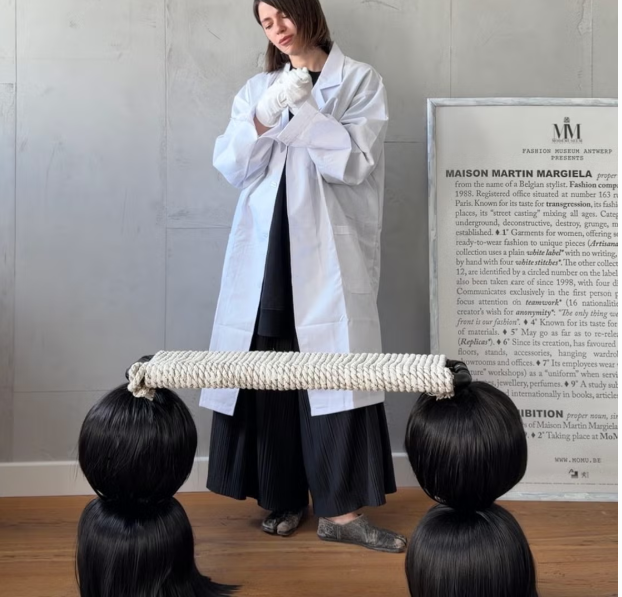
More recently, she created a bench using construction pipes, rope, and synthetic hair—an object inspired by Margiela’s archival references and repurposed materials. The result feels less like furniture in the traditional sense and more like a wearable memory frozen in physical form.
Her process is intuitive rather than technical. Ideas are not carefully engineered—they are assembled through instinct, experimentation, and emotional connection to fashion history.
Margiela’s Influence: Deconstruction as Inspiration
To understand her work, it helps to understand the language of Maison Margiela itself.
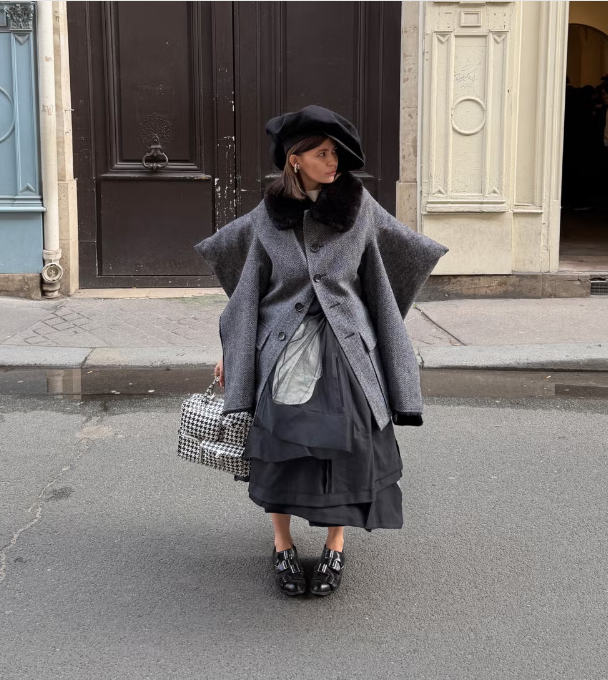
Since its founding in 1988, the house has built its identity around deconstruction, anonymity, and the transformation of everyday objects into luxury garments. Seams are exposed, silhouettes are distorted, and materials are often recontextualized in ways that challenge traditional ideas of beauty and craftsmanship.
This philosophy extends beyond clothing. Under Glenn Martens’ recent direction, the brand continues to explore materiality, memory, and object transformation—particularly in its Artisanal collections.
In this context, Nagornova’s furniture feels less like fan art and more like a parallel interpretation of the same conceptual universe.
The Margiela FW26 Connection
Her work recently intersected directly with Maison Margiela’s Fall 2026 narrative, which itself leaned heavily into ideas of objects, interiors, and reconstructed materials.
The collection—staged in Shanghai—merged ready-to-wear and artisanal design, using elements like porcelain fragments, repurposed textiles, and sculptural silhouettes that blurred the boundary between clothing and installation.
Within this broader creative landscape, Nagornova was invited to contribute to a digital collaboration tied to the brand’s evolving archival storytelling projects.
The invitation was simple but open-ended: create something inspired by Margiela’s archival language using provided conceptual references.
For her, it became an opportunity to complete a personal trilogy of works inspired by the house—culminating in a final bench-like structure that fused construction materials, wigs, and rope into a single sculptural object.
Objects as Emotional Archives
What makes her practice compelling is not just its visual impact, but its emotional logic.
She does not treat objects as static design pieces. Instead, they function as archives of feeling—constructed from personal obsession, memory, and interpretation.
A wig-covered chair is not just an object; it is a response to a runway image, a conversation with an archive, and a physical translation of a visual idea. In this sense, her work mirrors Margiela’s own approach, where garments often carry traces of history, decay, and transformation.
Everything is interconnected: fashion, furniture, photography, and digital storytelling become part of the same ecosystem.
The Internet as a Creative Studio
A defining part of her practice is its digital origin.
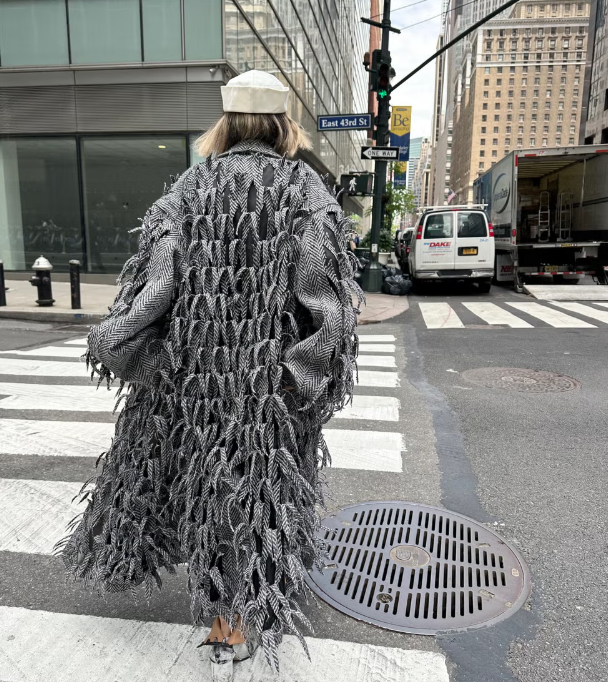
Her Instagram presence is not simply documentation—it functions as a kind of living sketchbook. It is where ideas are tested, shared, and refined in real time. The aesthetic is intentionally minimal, often monochrome, and focused on form rather than trend-driven visuals.
Unlike traditional fashion influencers, she is not interested in styling outfits or promoting consumption. Instead, she uses her platform to explore how fashion ideas can evolve into physical objects.
This rejection of traditional “fashion content” has ironically become what makes her stand out in the fashion system.
Why Margiela Recognized Her Work
Fashion houses rarely respond directly to fan culture, but Margiela is a notable exception.
The brand has long been interested in anonymity, reinterpretation, and the transformation of everyday creativity into high concept design. In that sense, Nagornova’s work aligns naturally with its philosophy.
Her pieces do not imitate Margiela—they extend its logic into another medium.
A chair becomes a garment. A bench becomes an archive. A wig becomes structure rather than decoration.
It is this conceptual continuity that makes the collaboration feel less like a novelty and more like an evolution.
The Bigger Idea: Fashion Beyond Clothing
This story ultimately reflects a larger shift in how fashion is being understood today.
Fashion is no longer confined to garments. It extends into interiors, digital spaces, sculpture, and installation. Designers increasingly think in terms of environments rather than individual pieces, and creators outside traditional fashion systems are contributing to that expansion.
Nagornova represents this shift clearly. Her work exists at the intersection of fashion, design, and contemporary art—where boundaries are intentionally blurred.
In this space, obsession is not something to be contained. It becomes material.
Final Thoughts: When Obsession Becomes Form
The story of a Margiela superfan turning her fascination into furniture is more than a niche fashion narrative—it is a reflection of how creative culture is evolving.
What once existed as admiration has become production. What began as digital storytelling has become physical sculpture. And what started as fandom has entered the language of contemporary design.
At its core, this is not just about Margiela. It is about what happens when fashion stops being something you wear—and starts becoming something you build.
Because sometimes, the most interesting designs do not come from studios or runways.
They come from obsession, carefully assembled into form.